
Circe by Madeline Miller
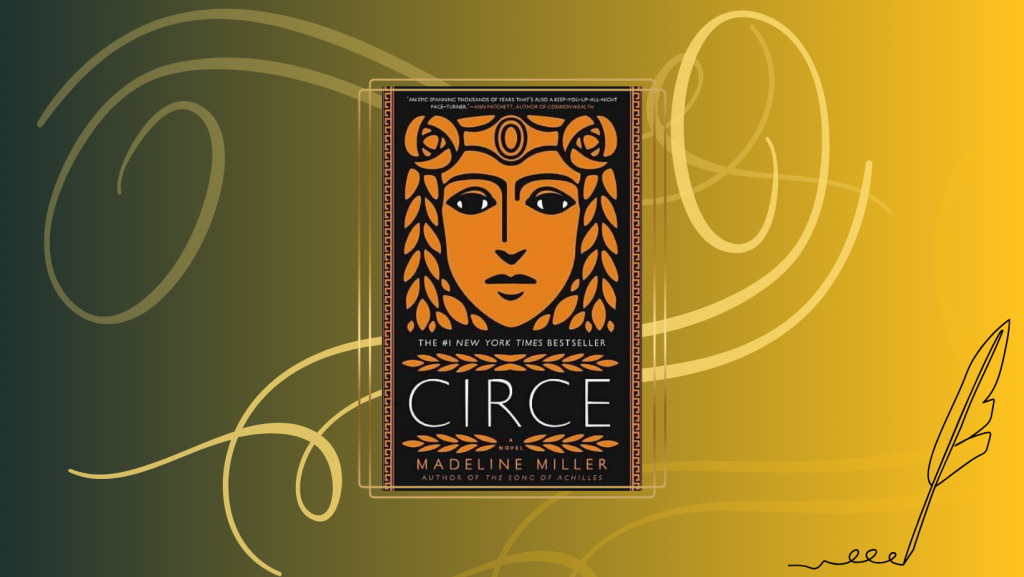
Whispers of the Story
Circe is a supernatural being who is mocked and ignored by her family because she lacks extraordinary beauty and abilities. She falls in love with a mortal man and turns him into a beautiful god. Because of his new status, he rejects her and chooses a beautiful nymph as his wife. Heartbroken, Circe transforms her into an ugly sea monster and is banished on an island.
In her new home, she devotes herself to studying and perfecting her witchcraft. Her only connection to the other world is when Hermes appears and shares news. She transitions to a mature woman learning the complexities of forgiveness, compassion, and love. She delivers the Minotaur, helps Medea, turns men into pigs (rightfully so), falls in love with Odysseus, gives birth to his son, and fights with a goddess for 16 years.
Circe falls in love again with someone unexpected and very young, another Ancient Greek story when family relations don’t matter. But this time she does it the other way around.
Review of Circe by Madeline Miller
The first time I came across the name Circe was in The Odyssey by Homer as the evil witch that transformed the sailors who came to her island into pigs, and only Odysseus outsmarted her. I think many people first heard of her in that context. But I must say reading this novel made me realize once again how complex we are and that there is more than meets the eye. Madeline Miller did a fantastic job bringing Circe into the 21st century and telling her story.
Circe lived in a society where beauty had the highest values, wits, and kindness were overlooked. Even Glaugos, who claimed to fall in love with her as a mortal, fell into the trap of arrogance once he became a god, and chose as a bride a beautiful nymph. Circe found herself only when forced to live alone on an island. She found peace, serenity and developed her abilities in order to become a powerful witch. I can’t help but draw comparisons to our world, where women are occasionally selected based more on their appearance than their qualities. Women strive to be more physically attractive in every culture, and some of them prioritise this over education. It’s possible that the author intended to convey the idea that a woman might evolve more if the social standards of beauty were removed. However, this is not to diminish Circe’s beauty. She was beautiful, but her persona, spirit, and kindness were the main attraction, that’s why she had as lovers the most smart and cunning men in ancient Greece: Hermes, Daedalus, and Odysseus (you can click on their names to find out more about them.)
I see the story of Circe as a coming-of-age story. Circe crying over her loneliness and resentful at how the others treat her, up until she transforms Scylla into a monster is like a teenage girl. She tries to fit into a world that does not look at her twice. Circe on the island is the young woman who found a role in life, is good, and kind, but also discovers what being a woman means. The episodes in which she takes Hermes as her lover out of loneliness, she warns Medea that her marriage will not last, seeing herself in her as the girl who was desperate to be loved by someone, and when she hates the nymphs sent on the island as a punishment – all bear witness to this. Circe reaches a point when she does not like the young girls who make a lot of noise, are shallow, and do not take their chores seriously. This is Circe who is more mature and distances herself from the younger generation. When she is raped, she also learns that kindness is not always the best attitude. Odysseus teaches her forgiveness, compassion, and love, Circe becomes a full-grown woman. The next part for her is motherhood which comes with its battles, protecting the child at all costs, fear of losing him, and in the end, letting him go to fulfill his destiny whatever that might bring. If the young Circe strived to make the man she loves a god to live alongside her, towards the end of the process of maturity, she chooses to become a mortal to live with the man she loves, even if that means only years. The narrative’s cyclical nature was a nice touch. In Circe, we can find the embodiment of every type of woman.
Madeline Miller did a lot of research to bring to life Circe’s story, putting together all the small pieces where Circe is mentioned in the ancient stories, establishing a timeline, and presenting the values and morals of the society. Circe ends up with the son of the man she loves, Telemachus also being the half-brother to her son. For us, this might sound strange, but remember that in the stories from Ancient Greece, people, and supernatural beings especially did not care much about family connection in choosing lovers. It feels like justice is being served when Circe, a minor character from old tales, is revealed in this modern era.
If you are a fan of tales from Greek Mythology, this novel is a must-read. Madeline Miller also wrote The Song of Achilles so check it out as well.
Happy reading!
It’s your turn! If you liked my thoughts on this book, please consider following and contacting me so we can talk about it.


